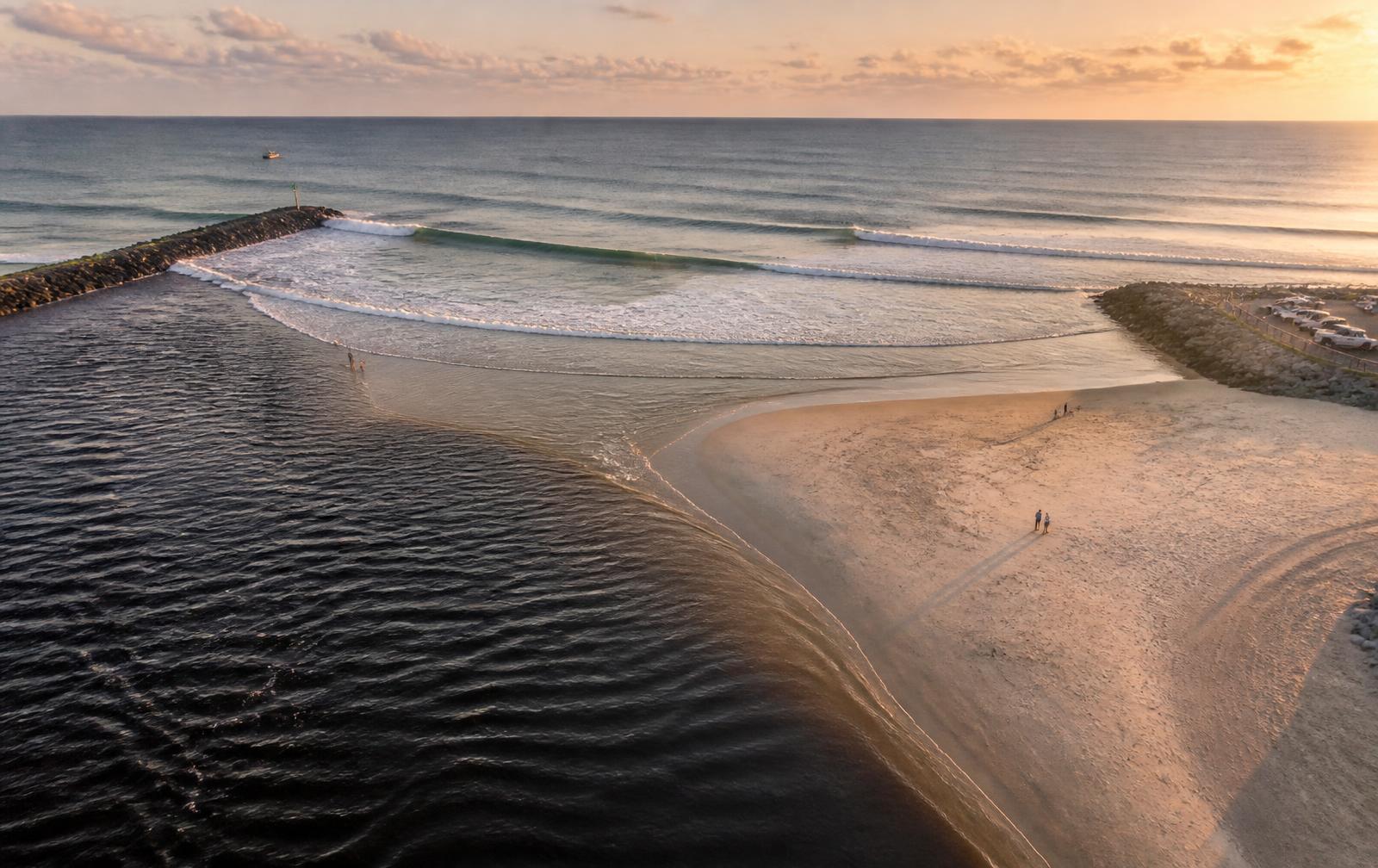
New Smyrna Beach, Florida
The shark bite capital of the world — and mostly a case of mistaken identity.
Volusia County records more shark bites than any comparable stretch of coastline on earth. Blacktips and spinner sharks account for the majority, and nearly every incident is a fast, single, exploratory strike in murky water.
Why here
Four conditions stacked on top of each other
No single factor explains New Smyrna Beach. It is the combination — an inlet, a bait highway, poor visibility, and an enormous number of people in the water — that produces the statistics.
The inlet
Ponce de Leon Inlet flushes nutrient-rich water from the Indian River system straight into the surf zone, concentrating bait right where people swim.
Sandbars and troughs
Shifting bars create deep, dark channels within a few yards of standing depth. Sharks hunt those troughs; surfers sit on them.
Turbid water
NSB water is frequently stained. In low visibility, a shark identifies prey by movement and flash — the two things a kicking foot produces.
Sheer exposure
This is one of the busiest surf beaches in Florida. Millions of hours of people in the water each year, in the same square mile that holds bait.
The role of blacktips and spinners
Species identification after a bite is genuinely difficult — the animal is gone in a second and the wound rarely gives a definitive answer. What investigators and local authorities consistently point to is a small, fast requiem shark in the surf zone, which in Volusia County means a blacktip or a spinner shark far more often than anything else.
That distinction matters, because it reframes what is happening. These are 4–5 foot animals hunting mullet at high speed in water where they cannot see clearly. They are not stalking swimmers, and they do not return for a second bite. The injury pattern locally reflects that: a single strike, usually to a foot, ankle or hand, treated and released the same day.
Keeping perspective
New Smyrna Beach hosts millions of water-hours a year. Against that denominator, the bite count is remarkably small — but the local reporting is unusually thorough, which is part of why the number looks so high compared with beaches that simply do not record incidents as carefully.
Live feed
Blacktip incidents in NSB
Volusia County and New Smyrna Beach items surfaced from local reporting, with nsbsharkbite.com prioritized as the primary source.